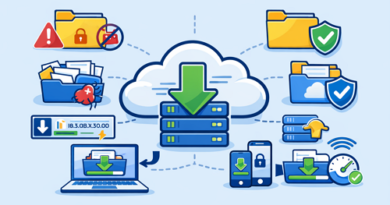
Ethernet vs Wi-Fi for Large File Downloads: Which Is Faster?
When downloading large files from services such as Keep2Share, your internet plan is only part of the equation. The connection between your device and router can also affect download speed, stability, and how often a transfer slows down. For large downloads, the choice between Ethernet and Wi-Fi can make a noticeable difference.
-> Go to k2s.cc and create Premium Account
Ethernet vs Wi-Fi: What Changes?
Ethernet connects your computer directly to the router, avoiding many wireless variables. Wi-Fi is more convenient, but its performance can change because of distance, walls, interference, and other connected devices. Wi-Fi also has communication overhead, meaning its advertised link rate does not represent the actual throughput you will see during a file transfer.
| Factor | Ethernet | Wi-Fi |
|---|---|---|
| Stability | Excellent | Depends on signal |
| Interference | Very low | Can be significant |
| Convenience | Requires cable | Excellent |
| Large downloads | Best choice | Good with strong signal |
| Mobility | Limited | Excellent |
Why Ethernet Often Wins for Large Downloads
A wired connection is usually the safer choice for multi-gigabyte files because it provides a more consistent path between your device and router. Cable quality, network hardware, and computer performance still matter, but Ethernet avoids many radio-frequency problems that can affect Wi-Fi.
For the best results:
- Connect your computer directly to the router with Ethernet.
- Use a suitable, undamaged network cable.
- Pause other bandwidth-heavy downloads and streaming.
- Check your actual connection speed instead of relying only on advertised rates.
- Keep your browser and network drivers updated.
When Wi-Fi Is Good Enough
Modern Wi-Fi can deliver excellent performance when the router and device support newer standards and the signal is strong. Wi-Fi 6, for example, improves efficiency and can handle busy networks more effectively.
For everyday downloading, a strong 5 GHz or 6 GHz connection may be perfectly adequate. For extremely large files, however, Ethernet remains the better option when maximum consistency matters.
If you want to improve wireless performance further, learning how to optimise Wi-Fi for file transfers can help you get more from your existing connection.
-> Go to k2s.cc and create Premium Account